

Is calamari halal? Calamari is generally considered halal according to the Shafi‘i, Maliki, and Hanbali schools, but the standard Hanafi ruling does not permit it because squid is not classified as fish. For Shia Muslims, the ruling depends on the religious authority they follow; Ayatollah Sistani’s guidance does not permit squid.
In the United States, calamari is commonly served as a fried appetizer at Italian, Greek, and seafood restaurants. The ruling on squid itself comes first, but the batter, cooking oil, and dipping sauce also matter.
Related Guide: Is Shrimp Halal?
Calamari Is Squid, Not a Special Type of Fish
On restaurant menus, calamari is the culinary name commonly used for squid. It is often cut into rings, coated in batter, and fried until crisp. Some restaurants serve it grilled, sautéed, or mixed into pasta.
You may find calamari on menus in New York City, Boston, Chicago, Los Angeles, and Miami, especially at Italian and Mediterranean restaurants.
The name can make the dish sound different from other seafood, but its Islamic ruling comes from the animal itself. Squid is a mollusk, not a fish. That classification explains why scholars differ over whether Muslims may eat it.
Why Do Islamic Schools Differ on Calamari?
The disagreement concerns which sea creatures fall within the category of permissible seafood. The schools do not interpret these rules in exactly the same way.
| Islamic school or authority | General ruling on calamari |
|---|---|
| Hanafi | Not permissible under the standard ruling |
| Shafi‘i | Generally permissible |
| Maliki | Generally permissible |
| Hanbali | Generally permissible |
| Ja‘fari — Ayatollah Sistani | Not permissible under his seafood guidance |
These are general summaries of commonly cited positions. They should not be read as a claim that every scholar within a school agrees on every detail.
Why Is Calamari Not Permissible Under the Standard Hanafi Ruling?
The standard Hanafi approach permits fish from the sea but does not extend that permission to every aquatic animal. Since squid is not classified as fish, calamari is generally considered impermissible under this ruling.
Some Hanafi sources describe the ruling as makruh tahrimi, a serious prohibition in Hanafi terminology rather than an ordinary disliked action.
The difference is not about whether calamari is fried, fresh, or served with a sauce. Under the standard Hanafi position, the squid itself remains the issue.
What About Shia Muslims?
Shia Muslims should consult the religious authority they follow. For example, Ayatollah Sistani’s guidance permits scaled fish and shrimp but excludes other marine animals outside those categories. Under that guidance, squid is not permissible.
This is a specific Ja‘fari ruling and should not be presented as the position of every Shia scholar.
What Does the Qur’an Say About Eating Calamari?
The Qur’an discusses the permissibility of sea game in Surah Al-Ma’idah 5:96. Scholars interpret this general permission when determining which marine animals Muslims may eat.
The verse does not name calamari or squid specifically. The Shafi‘i, Maliki, and Hanbali schools generally take a broader approach to seafood, while the standard Hanafi position limits permissible sea animals to fish.
For that reason, it is more accurate to explain how scholars apply the general rule than to claim that the Qur’an explicitly declares calamari halal or haram by name.
For More: Is Crab Halal in Islam?
Can Calamari Become Non-Halal Because of Its Ingredients?
If you follow a school that permits calamari, the rest of the dish still needs checking. A restaurant may use a simple coating, a beer-based batter, or a sauce made with wine. The menu name alone does not tell you which ingredients are used.
| Calamari dish | What to check |
|---|---|
| Fried calamari rings | Ask about the batter, seasoning, frying oil, and shared-fryer practices. |
| Beer-battered calamari | Check whether beer or another alcohol-containing ingredient is used in the batter. |
| Grilled calamari | Ask about marinades, glazes, and added sauces. |
| Garlic-butter calamari | Check whether the sauce contains wine or any other ingredient you avoid. |
| Calamari pasta | Check the sauce, stock, wine, and any meat ingredients. |
| Calamari with marinara sauce | Check the recipe rather than assuming every restaurant uses the same ingredients. |
If you follow the standard Hanafi ruling, removing the sauce or changing the batter does not make the squid itself permissible.
Is Squid Ink Halal?
Some dishes use squid ink to give pasta, risotto, or seafood dishes a dark color and distinctive flavor. Squid ink has its own scholarly discussion, so it should not automatically be treated as a separate ingredient with one universally accepted ruling.
Some scholars who permit squid also consider its ink permissible, while other rulings have treated the ink separately. The position of the scholar or authority you follow therefore matters.
For Muslims following the standard Hanafi ruling, the fact that squid ink is used instead of visible squid does not automatically make the dish permissible. If you follow another school, ask a qualified scholar about a specific squid-ink product when its status is unclear.
Is Frozen or Packaged Calamari Halal?
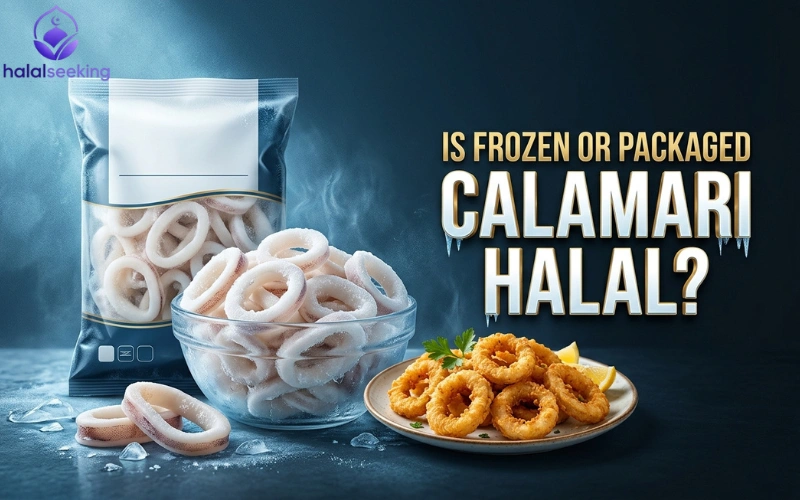
Frozen or packaged calamari can be easier to check than restaurant dishes because the packaging may list the ingredients. However, the word “calamari” alone does not confirm that every product meets your halal requirements.
When buying calamari in a U.S. supermarket or seafood store, check these details:
- Ingredients: Plain frozen squid may have a short ingredient list, while seasoned or breaded calamari can contain additional ingredients.
- Batter and seasoning: Check for beer batter, wine-based ingredients, flavorings, or other ingredients that raise concerns under the guidance you follow.
- Halal certification: If the product carries a halal logo, check whether the certification applies to that particular product.
- Preparation instructions: If you cook it at home, use suitable ingredients and cooking equipment according to your own halal requirements.
Freezing or packaging does not change the animal’s classification under Islamic law. Under the standard Hanafi ruling, calamari remains impermissible because squid is not classified as fish. The Shafi‘i, Maliki, and Hanbali schools generally permit it, subject to the ingredients and other relevant requirements.
If the ingredient list is unclear, check with the manufacturer or a halal certifier rather than guessing.
What Should You Ask Before Ordering Calamari in the U.S.?
At an Italian restaurant, seafood grill, or Mediterranean restaurant, ask a few direct questions instead of relying on the description “seafood appetizer.”
Ask what is in the batter. Find out whether it contains beer, wine, or another ingredient you avoid.
Check the frying oil if necessary. Ask whether the fryer is shared with pork products or other foods that raise concerns for your practice. The significance of cross-contact can depend on the circumstances and the religious guidance you follow.
Ask about the sauce. Garlic butter, marinara, aioli, and specialty sauces can have different recipes. Do not assume all versions use the same ingredients.
Check halal certification claims. A seafood restaurant is not automatically a halal restaurant. If it claims certification, confirm that the certification applies to the location and food you plan to order.
Most importantly, establish whether calamari is permissible under the school you follow before spending time checking the recipe. That avoids confusing an ingredient question with the underlying religious ruling.
See Also: Is Lobster Halal?
FAQs
Can Muslims eat calamari?
Muslims who follow the Shafi‘i, Maliki, or Hanbali schools generally can eat calamari, provided the other ingredients meet their requirements. Under the standard Hanafi ruling, calamari is not permissible because it is squid rather than fish.
Is fried calamari halal?
Frying does not determine the ruling on squid itself. If your school permits calamari, check the batter, oil, and sauce. Under the standard Hanafi ruling, frying does not make squid permissible.
Are calamari rings the same as squid?
Yes. Calamari is the common culinary name for squid, and rings are a popular way to serve it.
Does calamari need zabiha?
Squid is not slaughtered in the same way as land animals. However, that does not make it permissible under every school. The standard Hanafi ruling excludes squid because it is not fish.
Is calamari halal according to the Hanafi school?
The standard Hanafi ruling does not permit calamari because squid is not classified as fish. A qualified Hanafi scholar can explain the relevant terminology and any specific scholarly position you wish to follow.
Is calamari halal for Shia Muslims?
It depends on the religious authority followed. Under Ayatollah Sistani’s guidance, squid is outside the permitted categories of seafood.
Is beer-battered calamari halal?
The answer depends on the ruling you follow on squid and the ingredients in the batter. Beer in the recipe raises a separate concern, so check the ingredients and follow qualified religious guidance.
Can I order calamari at a seafood restaurant in America?
That depends first on your school’s ruling on squid. If your school permits calamari, ask about the batter, sauces, cooking oil, and any other ingredients relevant to your requirements.
Conclusion
Calamari is squid, and its halal status differs between Islamic schools. The Shafi‘i, Maliki, and Hanbali schools generally permit it, while the standard Hanafi ruling does not. Under Ayatollah Sistani’s guidance, squid is also not permissible.
For Muslims in the United States, check two things: whether your school permits squid and whether the product or restaurant recipe meets your dietary requirements. Batter, beer, sauces, and other added ingredients can matter, but they do not change the underlying school-specific ruling on calamari.