

Is Red Bull Halal? Yes, the Original Red Bull Energy Drink appears halal based on its published U.S. ingredient information. Red Bull confirms that its taurine, caffeine, and vitamins are synthetically produced and that its Original, Sugarfree, Zero, and Editions products contain no animal-derived substances. However, an ingredient-based assessment is not the same as having a verified halal certificate for the U.S. market.
For Muslims in the United States, the main concern is not bull-derived taurine. Red Bull says its taurine is synthetic, not taken from bulls or other animals. The more useful distinction is between a product’s ingredients and its formal halal certification.
Why Do Muslims Question Red Bull’s Halal Status?
The concern usually comes from one ingredient: taurine.
The name sounds as though it might come from a bull, and claims about bull urine, blood, or other animal substances have circulated online. This has led some consumers to question whether Red Bull contains animal-derived ingredients.
But the name does not tell you where an ingredient comes from. Taurine is a naturally occurring amino acid found in the human body and in various foods. It can also be manufactured synthetically.
Red Bull directly addresses this concern in its ingredient information. The company says its taurine, caffeine, and vitamins are synthetically produced. It also states that its energy drinks do not contain substances derived from animals.
That makes the bull-derived taurine claim inconsistent with the manufacturer’s published explanation.
Is Taurine in Red Bull Halal?
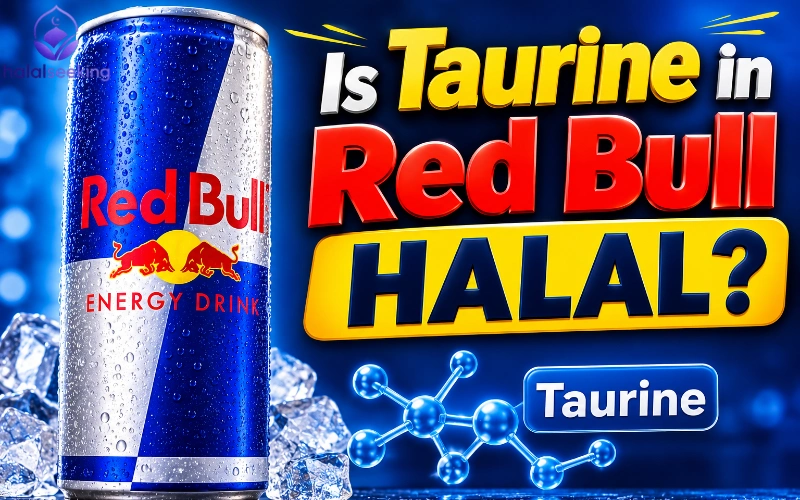
Red Bull’s taurine is synthetically produced, according to the manufacturer. It is not extracted from bull organs, blood, or other animal parts.
This matters because the source of an ingredient can affect its halal status. If taurine were obtained from an animal, its origin and processing would need to be examined. Synthetic taurine does not raise that same animal-source concern.
Red Bull also explains that taurine is an amino acid naturally present in the human body and involved in several biological processes.
So, the common claim that Red Bull contains bull sperm or bull urine is not supported by the manufacturer’s ingredient information.
The distinction is simple:
- Synthetic taurine: Not obtained from an animal.
- Animal-derived taurine: Would require investigation of its source.
- Red Bull’s stated taurine source: Synthetic.
For the U.S. product, Red Bull’s own explanation provides direct evidence about this ingredient. It is more reliable than social media claims based only on the word “taurine.”
What Ingredients Are in Red Bull Energy Drink?
Red Bull’s U.S. ingredient information identifies five main components: caffeine, taurine, B-group vitamins, sugars, and water.
Here is what matters when assessing them for halal consumption.
| Ingredient | Purpose | Halal concern |
|---|---|---|
| Caffeine | Helps increase alertness | Not an animal-derived ingredient |
| Taurine | Amino acid used in the formula | Red Bull says it is synthetic |
| B-group vitamins | Includes B3, B5, B6, and B12 | Red Bull says its vitamins are synthetically produced |
| Sugar | Provides carbohydrates | Red Bull says its sugar comes from plant sources |
| Water | Main beverage ingredient | No specific halal concern |
Red Bull also states that the sugar in its drink comes from plant sources. Its U.S. information identifies the B vitamins as niacin, pantothenic acid, vitamin B6, and vitamin B12.
Based on these published ingredient details, the main ingredients do not indicate a clear animal-derived halal concern.
One important point: the company’s ingredient overview is not a substitute for reading the complete ingredient declaration on the can. Flavors and product formulations can differ, so check the exact version you are buying.
Is Red Bull Original Halal in the USA?
The Original Red Bull is the clearest version to assess because Red Bull publishes U.S.-specific product information for it.
An 8.4 fl oz Original Red Bull contains:
- 80 mg caffeine
- 26 g sugar
- 110 calories
- Taurine and B-group vitamins
Red Bull identifies the sugar as plant-derived and says the taurine, caffeine, and vitamins are synthetically produced.
For Muslims checking the Original silver-and-blue can at a U.S. grocery store, convenience store, or gas station, these manufacturer statements support an ingredient-based halal assessment.
My assessment: The U.S. Original Red Bull appears halal by its disclosed ingredient sources. That does not establish that every U.S. can carries formal halal certification.
Is Red Bull Sugarfree Halal?
Red Bull Sugarfree is also supported by the manufacturer’s statement that its products contain no animal-derived substances.
Its U.S. ingredient information identifies:
- Taurine
- Caffeine
- B-group vitamins
- Sucralose
- Acesulfame potassium (Ace-K)
- Water
The sugar-free version uses non-caloric sweeteners instead of the sugar found in Original Red Bull. Red Bull describes sucralose as synthetically produced and explains that Ace-K is a non-caloric sweetener.
Neither sweetener is identified by the manufacturer as animal-derived.
My assessment: Red Bull Sugarfree appears halal by ingredients based on the company’s published information. Check the exact can label because formulations and markets can change.
Is Red Bull Zero Halal?
Red Bull Zero is another sugar-free option, but its sweetener combination differs from Sugarfree.
The U.S. product information lists monk fruit extract, sucralose, and erythritol as its sweeteners. It also contains the same main functional ingredients found in the Original formula, including caffeine, taurine, and B vitamins.
Red Bull describes these sweeteners as plant-derived or synthetically produced, depending on the ingredient. Its broader U.S. FAQ also states that Red Bull Zero contains no animal-derived substances.
My assessment: Red Bull Zero appears halal by its disclosed ingredients. This is an ingredient assessment, not a claim that every can has a halal certificate.
Are Red Bull Flavors and Editions Halal?
Red Bull sells more than its Original formula. Its U.S. product range includes flavored Editions, and some are also available in sugar-free versions.
Examples include:
- Red Edition
- Yellow Edition
- Sea Blue Edition
- Peach Edition
- Pink Edition
- Summer Edition
- Other seasonal flavors
Red Bull says its Editions contain the same functional ingredients as the Original drink, with different flavors. The company also states that its Editions do not contain animal-derived substances.
That is useful information, but it does not mean every flavor has an identical ingredient list. A flavored drink can contain different sweeteners, flavor ingredients, or other components.
For that reason, check the exact flavor and its current U.S. label rather than assuming that one product’s ingredient declaration applies to every Edition.
Some flavored products use vanilla-based ingredients, and their source can matter when assessing halal status. Read our guide to whether vanilla extract is halal.
Does Red Bull Have Halal Certification in the USA?
This is where an important distinction matters.
Red Bull’s U.S. ingredient and FAQ pages provide information about synthetic taurine and non-animal ingredients. However, those statements are not themselves a halal certificate.
The Halal Monitoring Authority (HMA) in Canada lists several Red Bull products as approved, including Original and multiple flavored Editions. Some entries are specifically described as vegan suitable.
That Canadian listing is useful supporting information, but it should not be presented as proof that every Red Bull product sold in the United States is halal-certified.
A certification decision depends on the certifier, product, market, and scope of the approval.
If you require a formal halal certificate rather than an ingredient-based assessment, look for a valid certificate covering the exact product and the U.S. market, or contact the manufacturer or certifying body.
Does Caffeine Make Red Bull Haram?
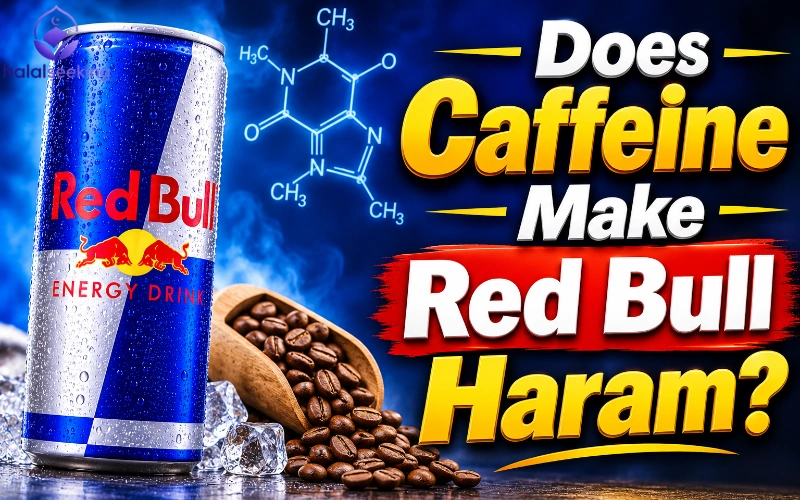
No. Caffeine is not automatically haram simply because it is a stimulant.
The Original Red Bull contains 80 mg of caffeine per 8.4 fl oz can. The U.S. Food and Drug Administration notes that up to 400 mg of caffeine per day is an amount not generally associated with negative effects for most healthy adults, although sensitivity and individual circumstances vary.
This is a separate issue from halal ingredients. A drink can have permissible ingredients while still being something a person should consume in moderation.
Muslims should consider their total caffeine intake from coffee, tea, soda, and energy drinks rather than looking at one can in isolation.
How to Check Red Bull Before Buying in the USA
If you are shopping at Walmart, Target, Costco, 7-Eleven, or another U.S. retailer, use these checks before purchasing:
- Check the exact product: Make sure you are looking at Original, Sugarfree, Zero, or the specific Edition you intend to drink.
- Read the ingredient label: Do not rely only on an online description or an older product image.
- Check for a halal logo: If formal certification matters to you, look for a valid mark and verify which product it covers.
- Confirm the market: A certificate or approval for a product sold in Canada or another country does not automatically cover the U.S. version.
- Check updated information: Manufacturers can change ingredients, suppliers, and product formulas.
This approach is more reliable than treating every drink under the Red Bull name as identical.
FAQs
1. Can Muslims drink Red Bull?
Based on Red Bull’s published ingredient information, its taurine, caffeine, and vitamins are synthetic, and the company says its drinks contain no animal-derived substances. The Original U.S. formula therefore appears halal by ingredients.
2. Does Red Bull contain bull sperm?
No. Red Bull’s taurine is synthetically produced, according to the manufacturer. The company does not describe it as coming from bull sperm or other animal material.
3. Is Red Bull made from bull urine?
No. The claim is not supported by Red Bull’s published ingredient information. Its taurine is synthetically produced.
4. Is Red Bull vegan?
Red Bull states that Original, Sugarfree, Zero, and Editions do not contain products or substances derived from animals. The company describes these products as suitable for vegans.
5. Is Red Bull Sugarfree halal?
Red Bull Sugarfree appears halal by ingredients based on the manufacturer’s information. Its sweeteners include sucralose and acesulfame potassium, and the company states that its products contain no animal-derived substances.
6. Is Red Bull Zero halal?
Red Bull Zero appears halal by its disclosed ingredients. It uses sweeteners including monk fruit extract, sucralose, and erythritol, alongside taurine, caffeine, and B vitamins.
7. Are Red Bull flavored Editions halal?
Red Bull says its Editions contain no animal-derived substances. However, flavors can have different ingredient lists, so check the exact U.S. product before buying.
8. Is Red Bull halal-certified in the USA?
I could not verify a current U.S.-market halal certificate covering all Red Bull products from the manufacturer’s U.S. information. Ingredient suitability and formal certification are separate matters.
Conclusion
The evidence supports a straightforward conclusion: Original Red Bull, Sugarfree, and Zero appear halal by ingredients based on the manufacturer’s published U.S. information. The common concern about taurine being extracted from bulls is not supported; Red Bull says it is synthetically produced.
The same manufacturer statement covers its Editions, although individual flavors should still be checked separately.
If you follow a halal-certification-only standard, do not treat a vegan statement or a Canadian product approval as a U.S. halal certificate. Verify the exact product and its certification before relying on that claim.