Is vanilla extract halal? It’s one of the most debated ingredients among Muslim consumers because most pure vanilla extracts contain alcohol.
At the same time, vanilla is found in everyday foods like cakes, cookies, ice cream, chocolate, and desserts. That leaves many Muslims wondering whether products containing vanilla extract are permissible to eat.
Before deciding, it’s important to understand:
- ✔️ Why vanilla extract contains alcohol
- ✔️ Why scholars have different opinions
- ✔️ Which vanilla products are generally considered halal
- ✔️ How to choose a halal-friendly alternative
Quick Answer
Vanilla extract is not a simple halal or haram ingredient. Most pure vanilla extracts contain alcohol because it’s used during the extraction process. As a result, Islamic scholars have different opinions about its permissibility.
Before buying a product, check:
- ✔️ Whether it’s pure vanilla extract or alcohol-free vanilla extract
- ✔️ Whether the product has halal certification
- ✔️ Whether the ingredient list clearly states the type of vanilla used
- ✔️ Whether you follow a particular scholarly opinion regarding alcohol in food
Why Does Vanilla Extract Create Confusion for Muslims?
Unlike many food ingredients, vanilla extract raises questions because it combines a naturally halal ingredient with an alcohol-based extraction process.
This often leads to questions such as:
- Is vanilla itself halal?
- Does the alcohol make vanilla extract haram?
- Does cooking remove the alcohol?
- Is alcohol-free vanilla extract a better choice?
Understanding the difference between the ingredient and its manufacturing process makes these questions much easier to answer.
What Is Vanilla Extract?
Vanilla extract is a flavoring made by soaking vanilla beans in a mixture of alcohol and water. The alcohol helps draw out the natural flavor compounds from the vanilla beans, creating the rich vanilla taste used in many foods.
You’ll commonly find vanilla extract in:
- Cakes and cupcakes
- Cookies and biscuits
- Ice cream
- Chocolate
- Breakfast cereals
- Protein shakes
- Yogurt
- Coffee drinks
Although vanilla beans are naturally halal, the extraction method is what creates the halal discussion.
Why Does Vanilla Extract Contain Alcohol?
Alcohol isn’t added to vanilla extract as a beverage. Instead, it acts as a solvent that extracts the flavor and aroma from vanilla beans.
Manufacturers use alcohol because it:
- Preserves the vanilla flavor
- Produces a consistent extract
- Extends shelf life
- Creates a stronger natural flavor
This explains why pure vanilla extract usually contains alcohol, while alcohol-free vanilla products are made using different extraction methods.
Is Vanilla Extract Halal? A Quick Overview
The answer depends on which type of vanilla product you’re using and which scholarly opinion you follow.
As a general overview:
- ✅ Vanilla beans are halal.
- ✅ Alcohol-free vanilla extract is generally considered halal.
- ⚠️ Pure vanilla extract contains alcohol, so scholars have different opinions about its use in food.
- ✅ Many Muslims choose halal-certified or alcohol-free vanilla products to avoid doubt.
In the next section, we’ll look at why scholars differ, compare vanilla extract with other vanilla products, and explain how to choose the best option for your halal diet.
Why Do Islamic Scholars Differ?
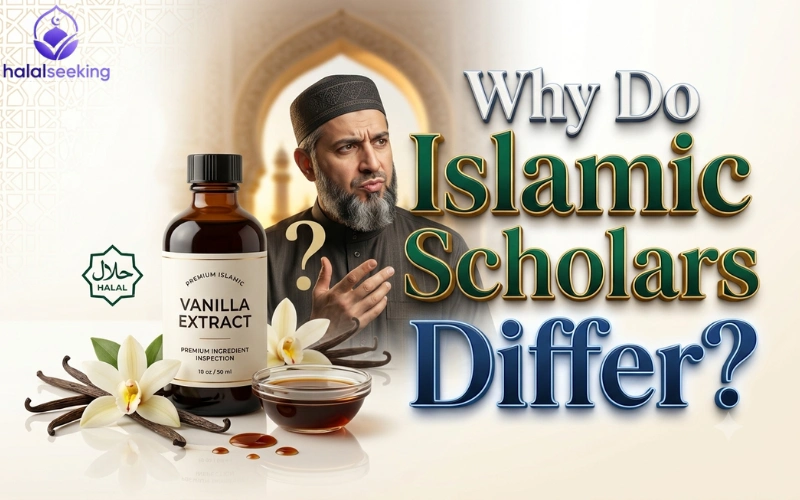
The discussion around vanilla extract is not about vanilla beans themselves. The difference of opinion comes from the alcohol used during the extraction process.
Some scholars focus on the presence of alcohol in the finished product, while others consider factors such as its purpose, quantity, and whether it causes intoxication.
In general, the opinions can be summarized as follows:
Opinion 1
Some scholars advise avoiding pure vanilla extract because it contains alcohol. They recommend choosing alcohol-free or halal-certified alternatives whenever possible.
Opinion 2
Other scholars consider vanilla extract permissible when the alcohol is used as a processing ingredient, is present in a very small amount, and the final food is not intoxicating.
Because respected scholars hold different views, many Muslims choose to follow the guidance of their trusted scholars or local Islamic authority.
Vanilla Bean vs Vanilla Extract vs Vanilla Flavoring
These products are often confused, but they’re not the same.
| Product | Contains Alcohol? | General Halal Consideration |
| Vanilla Bean | ❌ No | Generally halal |
| Pure Vanilla Extract | ✅ Usually | Scholars differ |
| Alcohol-Free Vanilla Extract | ❌ No | Generally halal |
| Vanilla Flavoring | ⚠️ Varies | Check the ingredient list |
| Vanilla Essence | ⚠️ Varies | Check ingredients and certification |
Knowing which product you’re buying makes it much easier to make an informed halal choice.
Can Muslims Bake with Vanilla Extract?
This is one of the most common questions from Muslim home bakers.
The answer depends on which vanilla product you use and which scholarly opinion you follow.
Many Muslims choose:
- ✔️ Alcohol-free vanilla extract
- ✔️ Halal-certified vanilla products
- ✔️ Pure vanilla extract if they follow scholars who consider its use permissible
If you’re unsure, selecting an alcohol-free alternative is the simplest way to avoid differences of opinion.
When Should You Avoid Vanilla Extract?
You may want to avoid a vanilla product if:
- ✔️ The ingredient list doesn’t clearly identify the type of vanilla.
- ✔️ The product contains alcohol and you follow the stricter scholarly opinion.
- ✔️ The manufacturer doesn’t provide enough ingredient information.
- ✔️ A halal-certified alternative is readily available.
Choosing a clearly labelled product can help remove unnecessary doubt.
How to Choose a Halal Vanilla Product
Before buying foods that contain vanilla, take a moment to check the label.
Use this quick checklist:
- ✔️ Look for alcohol-free vanilla extract whenever possible.
- ✔️ Choose products with a trusted halal certification.
- ✔️ Read the complete ingredient list.
- ✔️ Check whether the product uses pure vanilla extract or another type of flavoring.
- ✔️ Contact the manufacturer if the ingredient information is unclear.
A few simple checks can help you choose vanilla products with greater confidence.
If you’re researching halal food ingredients, you may also find these guides helpful:
FAQs
Is Vanilla Extract Halal or Haram?
There isn’t a single answer that all scholars agree on. Alcohol-free vanilla extract is generally considered halal, while opinions differ regarding pure vanilla extract because it contains alcohol used during the extraction process.
Is Alcohol-Free Vanilla Extract Halal?
Yes. Since it doesn’t contain alcohol, alcohol-free vanilla extract is generally considered a halal-friendly option and is often preferred by Muslim consumers.
Does Vanilla Extract Contain Alcohol?
Yes. Most pure vanilla extracts contain alcohol because it is used to extract the flavor from vanilla beans. The amount varies depending on the product and manufacturing process.
Does Cooking Remove the Alcohol in Vanilla Extract?
Cooking may reduce some of the alcohol, but it does not always remove it completely. This is one reason why scholars have different opinions about foods made with vanilla extract.
Is Vanilla Flavoring the Same as Vanilla Extract?
No. Vanilla extract, vanilla flavoring, and vanilla essence are different products. Their ingredients and manufacturing methods vary, so always read the ingredient label before purchasing.
Can Muslims Eat Cakes or Cookies Made with Vanilla Extract?
That depends on the type of vanilla used and the scholarly opinion you follow. Many Muslims prefer products made with alcohol-free or halal-certified vanilla, while others follow scholars who permit pure vanilla extract under certain conditions.
How Can I Tell if a Vanilla Product Is Halal?
Use this simple checklist:
- ✔️ Check if it’s alcohol-free.
- ✔️ Look for halal certification.
- ✔️ Read the complete ingredient list.
- ✔️ Contact the manufacturer if the source isn’t clear.
Is Vanilla Bean Halal?
Yes. Vanilla beans are naturally halal. The discussion only begins when they are processed into products such as pure vanilla extract.
Conclusion
Is vanilla extract halal? The answer depends on the type of vanilla product and the scholarly opinion you follow.
As a general summary:
- ✅ Vanilla beans are naturally halal.
- ✅ Alcohol-free vanilla extract is generally considered halal.
- ⚠️ Pure vanilla extract contains alcohol, so scholars have different opinions about its permissibility.
- ✅ Choosing halal-certified or alcohol-free products is the easiest way to avoid uncertainty.
If you’re unsure about a product, take a moment to read the ingredient label or choose a clearly halal-certified alternative. A small check today can help you make a more confident halal choice.