
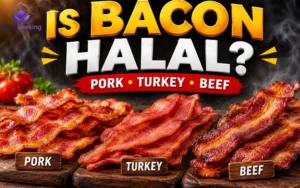

Is Bacon Halal? Traditional bacon is haram because it is made from pork. The Quran explicitly prohibits eating swine, so cooking, curing, smoking, or seasoning pork does not make it halal.
However, not every product called bacon comes from a pig. Turkey bacon, beef bacon, and chicken bacon are also sold in the United States. These alternatives can be halal, but only when the meat comes from an Islamically slaughtered animal and the product meets halal requirements.
The important question is not just whether the package says “bacon.” It is which animal the meat comes from and how it was processed.
Why Is Pork Bacon Haram in Islam?
Traditional bacon is usually made from cured pork, often from the pig’s belly. It is salted, smoked, and sliced into strips.
The prohibition comes directly from the Quran. In Surah Al-Baqarah (2:173), Allah forbids the flesh of swine, along with other prohibited foods. The same prohibition is also mentioned in Surah Al-Ma’idah (5:3).
This ruling does not change if pork bacon is:
- Smoked or grilled
- Fried until crispy
- Cured with salt or sugar
- Served with eggs or vegetables
- Made from a pig raised on an organic farm
A pig does not become a halal animal through a different cooking method or slaughter process. Pork bacon remains haram.
Related Guide: Is Gelatin Halal?
What Is Bacon Made Of?
Traditional American bacon is usually made from pork belly. The meat is cured with salt and may contain sugar, preservatives, seasonings, and smoke flavor.
Other bacon-style products use different meats:
- Turkey bacon uses turkey meat.
- Beef bacon uses beef.
- Chicken bacon uses chicken.
- Plant-based bacon uses ingredients such as soy, coconut, mushrooms, or other plant proteins.
The ingredients vary by brand. Some products also contain added flavorings, preservatives, and binding ingredients.
Reading the ingredient label helps identify the meat source, but it does not confirm whether the animal was slaughtered according to Islamic requirements.
Does Every Type of Bacon Contain Pork?
No. In American supermarkets and restaurants, the word “bacon” can describe products made from different ingredients.
| Type of bacon | Halal status | What to check |
|---|---|---|
| Pork bacon | Haram | Made from pig meat |
| Turkey bacon | Can be halal | Halal slaughter and certification |
| Beef bacon | Can be halal | Halal-slaughtered beef and processing |
| Chicken bacon | Can be halal | Halal slaughter and ingredients |
| Plant-based bacon | Can be halal | Flavorings, additives, and production |
The name alone is not enough to establish halal status. Check the actual product and its certification.
Is Turkey Bacon Halal?
Turkey bacon can be halal because turkey is a permissible animal in Islam. But that does not mean every turkey bacon product sold in the United States is halal.
The turkey must be slaughtered according to Islamic requirements. The product must also be free from pork-derived ingredients and unacceptable processing contamination.
For example, a package labeled “Turkey Bacon” may contain turkey meat, water, salt, sugar, and seasonings. That ingredient list tells you what is in the product, but it does not necessarily tell you how the turkey was slaughtered.
Before buying it, check for:
- A recognized halal certification mark.
- Confirmation that the turkey is halal-slaughtered.
- Ingredients that do not contain pork or other prohibited substances.
- Information about processing and shared equipment when relevant.
Do not assume that a mainstream supermarket turkey bacon brand is halal just because it contains no pork.
Is Beef Bacon Halal?
Beef bacon is made from beef rather than pork. It can be halal, but the same meat requirements still apply.
The cattle must be slaughtered according to Islamic requirements. The curing ingredients, flavorings, and manufacturing process must also meet halal standards.
A product made from ordinary beef is not automatically halal. This is especially important when buying beef bacon from a supermarket or ordering it at a restaurant.
Look for a current halal certificate or confirmation from the manufacturer. If the product has no reliable halal verification, do not treat the word “beef” as proof.
For More: Is Shake Shack Halal in the USA?
Are Bacon Bits Halal?
It depends on what the bacon bits are made from.
Some bacon bits contain real pork. These are haram, even when they are sprinkled over a salad, baked potato, soup, or burger.
Other products are imitation bacon bits made from ingredients such as soy protein, seasonings, and colorings. These do not automatically contain pork, but their flavorings and other ingredients still need to be checked.
Before buying bacon bits, look for:
- The source of the protein
- Pork, pork fat, or lard
- Animal-derived flavorings
- Halal certification
A product described as “artificial bacon bits” may be meat-free, but the label and manufacturer information should confirm what it contains.
Visit Also: Are Pringles Halal or Haram?
Is Bacon Flavor Halal?
The words “bacon flavor” do not always mean that a product contains actual pork.
Some bacon-style flavors are made using smoke flavor, yeast extracts, spices, or other flavoring ingredients. Others may use animal-derived ingredients.
That is why it is not accurate to declare every bacon-flavored snack haram—or halal—based on the flavor name alone.
Check the ingredient statement and contact the manufacturer if the source of the flavoring is unclear. A halal certification mark can provide additional assurance.
See Also: Is Gelatin Halal?
Is Bacon Grease or Lard Halal?
No. Bacon grease is the fat left after cooking pork bacon. Lard is rendered pig fat.
Both come from pork and are not halal.
This matters because pork fat is sometimes used in cooking rather than served as a visible piece of meat. For example, a restaurant may use bacon grease to flavor beans, vegetables, potatoes, or other dishes.
If a dish does not visibly contain bacon, that does not prove it is free from pork ingredients. Ask how it is prepared.
Is Bacon at McDonald’s Halal in the USA?
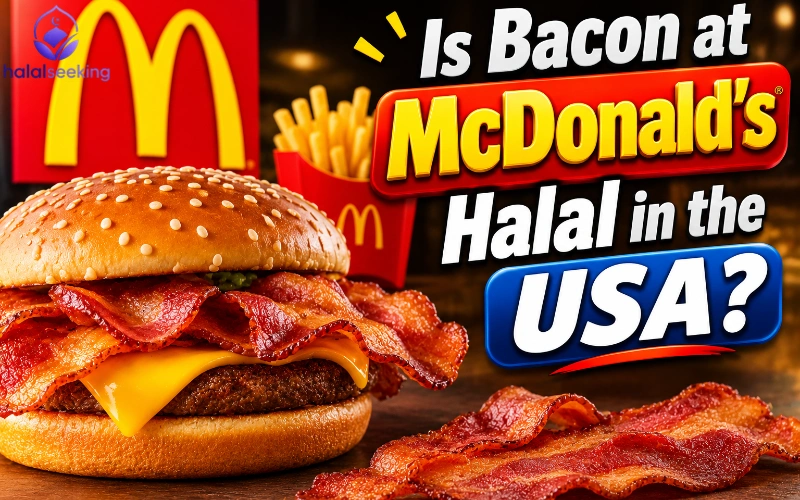
McDonald’s U.S. menu includes bacon-topped items, such as the Bacon Quarter Pounder with Cheese and Bacon, Egg & Cheese McGriddles.
Traditional pork bacon is not halal. Removing the bacon from a sandwich does not automatically make the entire meal halal because the remaining meat, ingredients, and kitchen preparation also matter.
If you are eating at McDonald’s in the United States, check the current menu and ask about the meat source and preparation. Do not assume a bacon-free version is halal simply because the visible pork has been removed.
Where Does Bacon Appear in American Food?
In the United States, bacon is common in breakfast dishes, burgers, sandwiches, salads, and restaurant sides. It may be an obvious topping or a less noticeable ingredient.
Here are some common examples:
Breakfast sandwiches: Bacon, egg, and cheese sandwiches often use pork bacon. Ask whether the restaurant offers a halal-certified turkey or beef alternative.
BLT sandwiches: The name stands for bacon, lettuce, and tomato. Traditional BLT sandwiches contain pork bacon.
Burgers: Bacon-topped burgers are common on American menus. Check whether the bacon is pork or a verified alternative.
Salads and baked potatoes: Bacon pieces may be added as toppings. Ask whether they are real pork bacon or a verified alternative.
Beans, soups, and vegetables: Some recipes use bacon or bacon fat for flavor, even when the dish does not look like a meat dish.
When eating out, do not rely only on removing visible bacon. Ask whether pork fat or bacon is used during preparation.
How to Find Halal Bacon in U.S. Grocery Stores
You may find turkey bacon, beef bacon, or plant-based bacon in American supermarkets such as Walmart, Costco, Target, and Aldi. However, availability does not mean a product is halal.
Use these checks before purchasing:
- Read the full product name and ingredient list.
- Confirm whether the meat is turkey, beef, chicken, or pork.
- Look for a recognized halal certification logo.
- Check the manufacturer’s website for product-specific halal information.
- Contact the manufacturer if the meat source or processing is unclear.
A “pork-free” or “turkey” label is not the same as halal certification. If you cannot verify the meat source and slaughter method, do not assume the product is halal.
What Should Muslims Ask Before Ordering Bacon-Free Food?
Removing bacon from a meal does not automatically make the rest of the dish halal. The meat itself may not be halal-certified, and the kitchen may use shared cooking equipment.
When ordering at a U.S. restaurant, ask:
- Does this dish contain pork, bacon, ham, or lard?
- Is the bacon made from pork, turkey, or beef?
- Is the turkey or beef halal-certified?
- Are the beans, vegetables, or potatoes cooked with bacon grease?
- Is a separate, clean cooking surface available?
For Muslims who avoid pork contact, it is also reasonable to ask whether the grill, pan, utensils, or fryer are shared with pork products.
A restaurant’s willingness to remove bacon is not the same as halal certification.
Halal Alternatives to Pork Bacon
If you want a bacon-style option without pork, there are several alternatives:
- Halal turkey bacon: Choose a product with reliable halal certification.
- Halal beef bacon: Check the slaughter source and certification.
- Halal chicken bacon: Verify the chicken source and processing.
- Plant-based bacon: Soy, coconut, mushroom, or other plant-based strips can be suitable when their ingredients and flavorings are halal.
These alternatives can provide a similar smoky or savory taste, but their halal status still depends on the actual ingredients and production.
FAQs
1. Can Muslims eat bacon?
Muslims cannot eat traditional pork bacon because pork is prohibited in Islam. Turkey, beef, or chicken bacon may be permissible if the meat is halal-slaughtered and the product meets halal requirements.
2. Is bacon haram in all four Sunni madhhabs?
Yes. The prohibition of pork is established by the Quran and is not a disputed ruling among the four Sunni schools of Islamic law.
3. Is turkey bacon halal in the USA?
It can be, but not every U.S. turkey bacon brand is halal-certified. Check the slaughter source and look for reliable halal certification.
4. Is beef bacon halal or haram?
Beef bacon can be halal when it comes from halal-slaughtered cattle and is processed without prohibited ingredients or pork contamination.
5. Is Canadian bacon halal?
Canadian bacon is traditionally made from pork loin. It is haram unless a product uses a different, halal-certified meat source. Check the package rather than relying on the name.
6. Are artificial bacon bits halal?
They may be halal if they contain no pork or other prohibited ingredients. Check the protein source, flavorings, and certification before buying.
7. Is bacon flavor made from real pork?
Not always. Some bacon flavors use smoke, spices, or plant-based ingredients, while others may contain animal-derived ingredients. Check the label and ask the manufacturer when the source is unclear.
8. Is bacon grease the same as lard?
They are not exactly the same product, but both can come from pork. Bacon grease is rendered during cooking, while lard is rendered pig fat. Both are prohibited.
9. Is bacon-wrapped food halal?
If the food is wrapped in traditional pork bacon, it is haram. A halal-certified turkey or beef bacon alternative may be used instead.
10. Does cooking pork bacon separately make it halal?
No. Cooking pork bacon separately does not change its halal status. It remains prohibited.
11. Does removing bacon from a burger make it halal?
Not necessarily. The burger patty, sauces, other ingredients, and preparation equipment must also meet halal requirements.
12. Is plant-based bacon halal?
Plant-based bacon can be halal if it contains permissible ingredients and does not use prohibited flavorings or processing aids. Check the ingredient list and certification.
Conclusion
Traditional bacon made from pork is haram in Islam, regardless of how it is cured or cooked.
Turkey, beef, and chicken bacon are different products. They can be halal when the meat is Islamically slaughtered, the ingredients are permissible, and the processing meets halal requirements.
For Muslims in the United States, the safest approach is to check the product’s halal certification rather than trusting words such as “turkey,” “beef,” “natural,” or “pork-free” on their own.
[…] For another example of how meat type affects Islamic dietary rules, see our guide on whether bacon is halal […]