
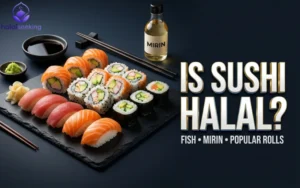

Is sushi halal? Sushi can be halal when it contains permissible seafood and other ingredients and is prepared according to your dietary requirements. Plain salmon or tuna sushi is generally easier to verify than rolls with imitation crab, eel sauce, mirin, sake, or other mixed ingredients. Your madhhab also matters when sushi contains shellfish or other seafood beyond ordinary fish.
For Muslims in the United States, the important question is not simply whether sushi contains fish. You also need to consider the rice seasoning, sauces, processed seafood, and how the restaurant prepares your order.
Related Guide: Is Shrimp Halal?
Is the Fish in Sushi Halal?
Fish such as salmon, tuna, yellowtail, and snapper are generally considered halal in the four Sunni schools of Islamic law. Fish does not require the ritual slaughter used for land animals.
That makes simple fish sushi a useful starting point for someone looking for halal options. However, the fish is only one part of the dish. A salmon roll can still contain a sauce or seasoning that needs checking.
Raw fish is not automatically haram simply because it is served uncooked. The halal question depends on the seafood, its ingredients, and preparation. Food safety is a separate issue from religious permissibility.
Does the Type of Seafood Matter?
Yes. Sushi menus can include fish, shrimp, crab, squid, octopus, and other marine animals. Islamic schools do not classify every type of seafood in exactly the same way.
| Seafood in sushi | What Muslims should know |
|---|---|
| Salmon, tuna, and yellowtail | Fish that is generally permissible across the four Sunni schools. |
| Shrimp and prawns | Generally permitted by the Shafi‘i, Maliki, and Hanbali schools; Hanafi scholars differ on their classification. |
| Crab | Its ruling differs by school, so check the position you follow. |
| Squid and octopus | Generally not permitted under the standard Hanafi position, while other Sunni schools generally permit them. |
| Imitation crab | Often made from processed fish, so check the actual ingredients rather than relying on the product name. |
The distinction matters most when ordering mixed seafood rolls. A sushi roll containing salmon is not the same religious question as one containing actual crab or octopus.
Which Sushi Ingredients Need Checking?
Some of the most important ingredients are added during seasoning or processing. The following table can help you decide what to ask about before ordering.
| Ingredient | What to check |
|---|---|
| Sushi rice | Rice vinegar, sugar, and salt are common ingredients. Ask whether the kitchen adds mirin, sake, or rice wine. |
| Mirin and sake | These are used in Japanese cooking and can raise concerns because of their alcoholic nature. Check whether they are ingredients in the rice or sauce. |
| Rice vinegar | Plain rice vinegar is generally treated differently from rice wine. Check the product if it contains other seasonings or has an unclear label. |
| Soy sauce | Formulations vary. Check the specific product or ask for a halal-certified option rather than assuming every soy sauce has the same status. |
| Imitation crab or surimi | Often made from processed white fish, but the added starches, egg, flavorings, colors, and other ingredients can vary. |
| Eel sauce or unagi sauce | Some commercial versions contain mirin or sweet rice wine. Check the actual sauce rather than relying on its name. |
| Teriyaki, ponzu, and spicy mayo | Recipes differ. Ask about alcohol-containing ingredients, flavorings, and other ingredients relevant to your dietary requirements. |
| Tempura batter | Check its ingredients and ask about shared frying oil if cross-contact is a concern for you. |
| Meat toppings | Chicken, beef, or other meat should come from a source that meets your halal requirements. |
Is Sushi Rice Halal?
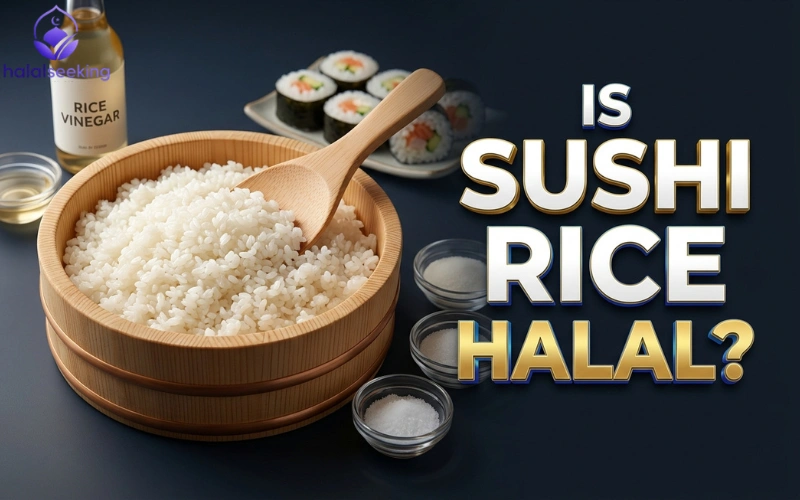
Sushi rice is commonly prepared with rice vinegar, sugar, and salt. These ingredients do not automatically make sushi rice haram.
The important question is whether the particular recipe includes mirin, sake, rice wine, or another ingredient of concern. Some preparations may use only vinegar-based seasoning, while others use additional Japanese cooking ingredients.
Do not assume that every sushi restaurant adds alcohol to its rice. Ask about the actual recipe.
For More: Is Crab Halal in Islam?
Is Soy Sauce Halal?
Soy sauce cannot be judged by name alone. Brands and formulations differ, and some products list alcohol as an ingredient or use it during processing.
For a straightforward choice, ask for a halal-certified soy sauce or check a product whose ingredients and certification you can verify. If a product contains alcohol or the manufacturing process raises questions, follow the guidance of a qualified scholar or halal certifier you trust.
Is Eel Sauce Halal?
Eel sauce, also called unagi sauce, is often a sweet, savory glaze served with cooked eel or other sushi dishes. Some commercial versions contain mirin or sweet rice wine.
The eel itself and the sauce are two separate considerations. Eel is a fish, but that does not automatically make every sauce served with it halal. Ask which sauce the restaurant uses and whether it contains mirin, sake, or another ingredient you avoid.
Are Popular U.S. Sushi Rolls Halal?
American sushi menus often combine seafood with mayonnaise, sweet sauces, fried ingredients, and processed fillings. Here is what to check in some familiar options.
| Popular roll | What to verify |
|---|---|
| Salmon avocado roll | Usually has a simple ingredient list, but check the rice seasoning and any added sauce. |
| Tuna roll or spicy tuna roll | Check the seasoning and whether the spicy version includes a sauce with ingredients of concern. |
| California roll | Often uses imitation crab, avocado, and cucumber. Verify the imitation crab ingredients and any mayonnaise or sauces. |
| Shrimp tempura roll | Check the shrimp ruling relevant to your madhhab, the batter ingredients, and frying practices. |
| Philadelphia roll | Commonly combines salmon and cream cheese. Check any additional sauces and the preparation method. |
| Eel or dragon roll | Check the eel preparation and especially the glaze or unagi sauce. |
| Vegetable or avocado roll | Vegetables alone are not the whole story. Check the rice seasoning, sauces, and shared preparation surfaces. |
These descriptions are common examples, not fixed recipes. A California roll at one restaurant may differ from a California roll at another. The name of a menu item cannot confirm its halal status.
Is Vegetarian Sushi Automatically Halal?
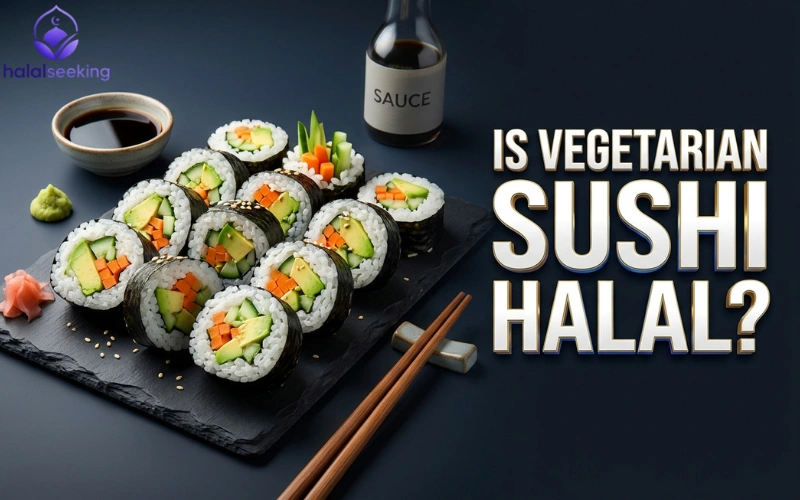
No. Vegetarian sushi avoids meat and seafood fillings, but its ingredients and preparation still matter.
For example, a cucumber or avocado roll may be easier to check than a complicated specialty roll. However, its rice seasoning, dipping sauces, mayonnaise, tempura coating, and preparation practices can still affect whether it meets your requirements.
If you want a simple order, ask for a vegetable roll with clearly identified ingredients and confirm the rice seasoning and sauces. Avoid assuming that “vegetarian” and “halal-certified” mean the same thing.
Visit Also: Is Squid Halal?
How Do the Four Sunni Madhhabs View Sushi?
There is no single ruling for every sushi roll because sushi can contain several different kinds of seafood.
- Hanafi: Fish is generally permissible. Shrimp and prawns are subject to a recognized difference of opinion among Hanafi scholars, while the standard Hanafi position does not permit many other marine animals, including crab, squid, and octopus.
- Shafi‘i: Fish and many other sea creatures are generally permissible, but specific species can have their own rulings.
- Maliki: The school generally permits a broad range of sea creatures, subject to its specific rules and exceptions.
- Hanbali: The school also generally permits a broad range of aquatic animals, with school-specific details.
For Shia Muslims, the ruling depends on the religious authority they follow. For example, Ayatollah Sistani’s guidance permits scaled fish and shrimp but does not permit other shellfish such as crab.
The practical takeaway is to identify the seafood in the roll first. A plain salmon roll and a mixed-seafood roll may need different checks under the school you follow.
How to Order Halal Sushi in the United States
Whether you are dining in New York City, Los Angeles, Chicago, Houston, or Seattle, do not assume that every restaurant uses the same ingredients or supplier. Menus and recipes can vary by location.
Before ordering, ask the staff these questions:
- Does the sushi rice contain mirin, sake, or rice wine? Ask about the actual seasoning rather than assuming all sushi rice is prepared the same way.
- What is in the sauce? Check eel sauce, teriyaki, ponzu, spicy mayo, and any house-made glazes.
- Is the crab real or imitation? If it is imitation crab, ask about the ingredients.
- Which seafood is in the roll? This is especially important if your madhhab distinguishes between fish, shrimp, and other seafood.
- Can you confirm the ingredients and preparation? If the staff cannot answer clearly, choose a simpler item or another option you can verify.
A restaurant that serves seafood is not necessarily halal-certified. If the restaurant claims halal certification, check that the certification applies to that exact location and the relevant food items.
For the simplest order, start with a plain fish roll, request the ingredients and rice seasoning to be confirmed, and use a dipping sauce whose status you can verify.
See Also: Is Octopus Halal or Haram?
FAQs
Can Muslims eat sushi?
Yes, Muslims can eat sushi that meets the requirements of their school of Islamic law and contains permissible ingredients. The ruling depends on the seafood, seasonings, sauces, and preparation.
Is raw salmon sushi halal?
Raw salmon sushi is generally permissible when the salmon and the remaining ingredients meet halal requirements. Its uncooked state does not automatically make it haram.
Is California roll halal?
It can be, but check the imitation crab, rice seasoning, and sauces. The recipe varies between restaurants, so the name alone does not settle the question.
Is sushi with mirin halal?
Mirin is a type of Japanese cooking wine and raises a clear concern for many halal consumers. A Hanafi fatwa specifically considers sushi containing mirin impermissible. Check the ingredients and follow the ruling of the scholar or authority you trust.
Does sushi contain pork?
Not every sushi roll contains pork. However, some menu items or specialty preparations may include meat toppings or ingredients that require checking. Ask about the specific recipe instead of assuming that all sushi is pork-free.
Is imitation crab halal?
Imitation crab is often made from processed fish, but recipes vary. Check the ingredients, flavorings, and any relevant certification before deciding.
Can I eat sushi at a non-halal-certified restaurant?
You may be able to find a suitable item, but the restaurant’s lack of certification means you need to verify the ingredients and preparation yourself. A seafood menu alone does not confirm halal status.
Is eel sushi halal?
Eel is a type of fish and is generally considered permissible under Sunni Islamic law. However, eel sushi is often served with a glaze, so check the sauce and other ingredients separately.
Conclusion
Sushi can be halal, but not every sushi roll is automatically halal. Plain fish sushi is generally the simplest place to start. The main things to verify are the seafood type, rice seasoning, mirin or sake, sauces, imitation crab, and preparation practices.
For Muslims ordering in the United States, the most reliable approach is to check the actual ingredients, account for your madhhab’s seafood rulings, and ask specific questions before ordering. Do not judge a roll by its name alone.