
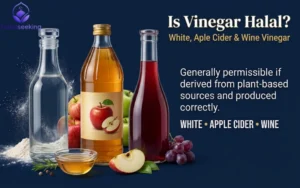

Walk through a U.S. supermarket and you will find distilled white vinegar, apple cider vinegar, malt vinegar, balsamic vinegar and rice vinegar on the same shelf. They all taste sour, but their sources and production methods differ.
Is vinegar halal? In most everyday cases, vinegar is considered permissible by many Islamic scholars. The main disagreement concerns vinegar deliberately made from wine, while flavored sauces and dressings may contain additional ingredients that need checking.
The useful first step is to identify the type of vinegar. Then check the ingredients and consider whether the scholarly disagreement applies to that product.
Quick Answer
Most ordinary vinegars, including distilled white vinegar and apple cider vinegar, are generally considered halal by many scholars. Wine vinegar is a separate issue because scholars differ over deliberate conversion from wine. For packaged sauces and dressings, check the full ingredient list and follow the scholarly guidance you trust.
Is vinegar halal in everyday U.S. foods?
Yes, ordinary vinegar is generally considered permissible by many scholars once fermentation has produced vinegar rather than an intoxicating alcoholic drink. However, scholars differ over wine that is deliberately converted into vinegar.
Vinegar appears in American kitchens in pickles, salad dressings, marinades, sauces and condiments. The word “vinegar” alone does not tell you everything about a finished product.
Some varieties come from apples, grains or rice. Others begin with wine. Seasoned vinegar can also contain sugar, salt, flavorings or other ingredients that require a separate check.
Which U.S. vinegars are generally considered halal?
Many scholars permit ordinary vinegar made from fruits, grains or other suitable sources, provided it has undergone the relevant fermentation process and contains no impermissible added ingredients. Wine vinegar requires more care because scholars differ about deliberate conversion from wine.
| Vinegar type | Common U.S. use | Main halal consideration |
|---|---|---|
| Distilled white vinegar | Pickles, sauces and marinades | Commonly accepted as ordinary vinegar |
| Apple cider vinegar | Dressings and marinades | Check the product and any added ingredients |
| Spirit vinegar | Condiments and packaged foods | Many scholars permit fully converted vinegar |
| Malt vinegar | Fish and chips, pickles and sauces | Check the ingredients and production details if needed |
| Rice vinegar | Sushi rice and Asian cooking | Check whether it is plain or seasoned |
| Balsamic vinegar | Salad dressings, glazes and marinades | Recipes vary, so check the ingredients |
| Red or white wine vinegar | Dressings, sauces and marinades | Deliberate conversion of wine is subject to scholarly disagreement |
This table is a practical guide, not a certification list. The name of a vinegar helps identify its type, but the production process can matter for wine vinegar.
Is distilled white vinegar halal?
Distilled white vinegar is generally considered permissible by many scholars. A common U.S. product is made from grain-derived ingredients and processed into vinegar, rather than being sold as wine vinegar.
For example, Heinz says its U.S. distilled white vinegar is made from a fermented mixture of American-grown corn and water. The finished product is diluted to 5% acidity, and its ingredient statement lists distilled white vinegar and water.
That product information helps identify what is in the bottle. It does not amount to halal certification, but distilled white vinegar is generally a straightforward choice for shoppers following the common permissive ruling on ordinary vinegar.
Is apple cider vinegar halal?
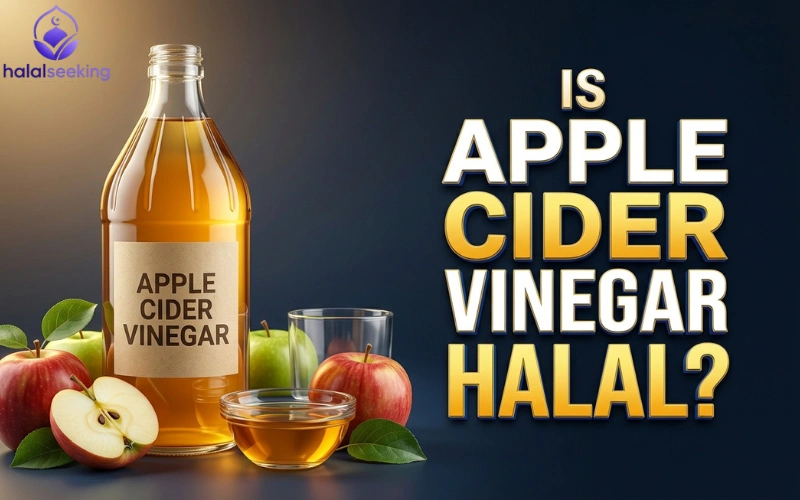
Apple cider vinegar is generally considered permissible by many scholars. Manufacturers produce it through the fermentation of apple juice, followed by the process that turns alcohol into acetic acid.
Bragg’s U.S. apple cider vinegar lists organic apples and water as ingredients. Heinz also sells apple cider vinegar made from apple juice. These ingredient lists provide useful product information, although they do not establish halal certification.
If you buy apple cider vinegar for cooking, salad dressing or marinades, check whether it is plain vinegar or a flavored product. A finished dressing may contain additional ingredients that require their own assessment.
Is spirit vinegar halal?
Many scholars, including contemporary Hanafi authorities, permit spirit vinegar when the alcohol has fully transformed into vinegar. The ruling concerns the finished product, not the use of an intoxicating drink as a beverage.
Spirit vinegar is made through fermentation and subsequent conversion into acetic acid. The name can sound concerning, but spirit vinegar is not itself the same as an alcoholic drink.
Darul Ifta Birmingham states that vinegar is permissible even when its origin is spirits or wine, provided it has transformed into vinegar. The 2026 ruling from the same institution also discusses spirit vinegar and wine vinegar under this approach.
Some scholars distinguish between naturally formed vinegar and wine deliberately converted through human intervention. That distinction matters particularly when assessing vinegar made from wine, so follow the scholarly position you trust.
Is red wine vinegar halal?
Red wine vinegar is subject to a genuine scholarly disagreement when manufacturers deliberately convert wine into vinegar. Many Hanafi scholars permit the finished vinegar after transformation, while the relied-upon Shafi’i position and some Hanbali and Maliki authorities do not permit deliberate conversion in the same circumstances.
The disagreement is not simply about whether the finished vinegar tastes alcoholic. It concerns what happened to the original wine and whether that transformation changes its ruling under Islamic law.
Some contemporary authorities permit wine vinegar once the alcohol has fully transformed. Other scholars distinguish between wine that becomes vinegar naturally and wine deliberately converted by adding a substance or using another process.
If you follow a particular madhab or scholar, use that guidance when deciding about red wine vinegar. If you prefer to avoid this area of disagreement, distilled white vinegar is a practical alternative.
Is white wine vinegar halal?
White wine vinegar raises the same scholarly question as red wine vinegar when manufacturers deliberately produce it from wine. Its pale color does not determine its halal status.
The relevant distinction is the starting material and the transformation process. White wine vinegar is not the same product as distilled white vinegar made from a fermented grain mixture, even though their names sound similar.
If your bottle says “white wine vinegar,” check the product information and follow the scholarly position you trust. If you want to avoid the disagreement, choose ordinary distilled white vinegar instead.
Is balsamic vinegar halal?
Balsamic vinegar is generally considered permissible by many scholars when the finished product qualifies as vinegar, but its ingredients and production methods differ between products.
Traditional balsamic vinegar uses grape must, while other commercial varieties may contain wine vinegar as part of their recipe. For example, Pompeian describes its balsamic vinegar products as grape-based. Other products may use different formulations.
That variation means you should read the label rather than assume all balsamic vinegar has the same recipe. Where wine vinegar is involved, the scholarly disagreement about deliberate conversion may also apply.
Is rice vinegar halal?
Plain rice vinegar is generally considered permissible by many scholars. However, you should distinguish it from rice wine and check seasoned varieties for their added ingredients.
Marukan sells plain rice vinegar as well as seasoned rice vinegar. Its U.S. Seasoned Gourmet Rice Vinegar lists rice vinegar, sugar, salt and water. Other products may use different formulations.
If a product lists sake, mirin or another alcohol-containing ingredient, assess that ingredient separately rather than assuming all rice vinegar is the same. For vinegar made by deliberately converting rice wine, the scholarly discussion about wine-origin vinegar may also be relevant.
Is malt vinegar halal?
Malt vinegar is generally considered permissible by many scholars when the finished product is genuine vinegar and contains no impermissible added ingredient.
Malt vinegar is commonly made through fermentation involving barley malt or other cereal sources, followed by acetic fermentation. It is often used with fries, fish and pickles.
If you buy plain malt vinegar, check the ingredient label and product details. A flavored malt-vinegar sauce may have additional ingredients that need a separate assessment.
Does vinegar contain alcohol?
Vinegar production can include an alcohol stage before the liquid undergoes acetic fermentation. The finished product is not the same substance as the original alcoholic beverage, although residual compounds can vary between products.
It would be inaccurate to claim that every vinegar contains exactly zero alcohol or that every bottle has the same residual amount. Chemical composition and manufacturing methods can differ.
The International Islamic Fiqh Academy and several contemporary fatwa bodies permit vinegar after transformation under their respective rulings. However, that does not mean every condiment containing vinegar is automatically permissible, because a finished sauce may include other ingredients.
The practical distinction is between vinegar that has formed through the relevant process and alcohol deliberately added to a finished food.
Visit Also: Is Vanilla Extract Halal?
Is vinegar in pickles, salad dressings and sauces halal?
Pickles, salad dressings and sauces can be halal when their ingredients meet the requirements you follow, but the word “vinegar” alone does not establish the status of the complete product.
Vinegar is common in U.S. pickles, ketchup, mustard, barbecue sauces, marinades and salad dressings. A plain vinegar product may have a simple ingredient list, while a ready-made sauce can include other ingredients that need checking.
| Product | What to check |
|---|---|
| Pickles | Vinegar type, seasonings and any other listed ingredients |
| Salad dressing | Vinegar type, flavorings and added ingredients |
| Ketchup | Full ingredient list, including any flavorings |
| Mustard | Vinegar type and additional ingredients |
| Barbecue sauce | Vinegar, flavorings and any alcohol-containing additions |
| Marinades | All ingredients, not just the vinegar |
If a finished product lists wine, liquor, sake or another ingredient that concerns you, assess it separately. Do not assume that every sauce is halal simply because vinegar appears on its label.
Is wine vinegar halal according to the four madhabs?
The schools differ over whether wine deliberately converted into vinegar becomes permissible after complete transformation. Many Hanafi scholars permit the resulting vinegar, while the relied-upon Shafi’i position and some Hanbali and Maliki authorities do not permit deliberate conversion in the same circumstances.
| Scholarly approach | General position on deliberate conversion of wine into vinegar |
|---|---|
| Hanafi | Generally permits the vinegar after transformation |
| Shafi’i | The relied-upon position does not permit deliberate conversion |
| Hanbali | Recognized authorities reject deliberate conversion in this context |
| Maliki | There is scholarly discussion, with authorities who reject deliberate conversion |
These are concise summaries of a specific issue, not a complete account of every position within each school. Scholars may discuss natural transformation differently from deliberate conversion.
IslamQA explains that wine that becomes vinegar by itself is treated differently from wine converted through deliberate intervention. Darul Ifta Birmingham’s Hanafi-oriented ruling takes a more permissive approach when the alcohol has fully transformed.
For a personal ruling, follow a qualified scholar who understands the school of thought you follow. An article can summarize the disagreement, but it should not claim that all four madhabs agree on every type of wine vinegar.
Is vinegar made from alcohol the same as alcohol added to food?
No. Vinegar produced through fermentation and acetic transformation is not the same as pouring wine or liquor into a finished sauce.
This distinction matters for packaged foods. A bottle may contain vinegar made through a fermentation process, while a dressing or marinade may contain vinegar plus separate wine, liquor, sake or another ingredient.
Read the full ingredient list if you are assessing a condiment or prepared food. Do not assume that a product contains wine merely because it lists vinegar, and do not assume a sauce is suitable simply because vinegar is one of its ingredients.
How can you check vinegar before buying in the USA?
Start with the product name and ingredient list. Identify whether you are buying distilled white vinegar, apple cider vinegar, spirit vinegar, malt vinegar, rice vinegar, wine vinegar or a finished sauce.
Use these checks:
- Confirm the type of vinegar and its source where the manufacturer provides that information.
- Check whether the label includes wine, liquor, sake, mirin or other ingredients that concern you.
- Distinguish plain vinegar from a flavored dressing, glaze or sauce.
- If wine vinegar is involved, follow the scholarly position you trust on deliberate conversion.
- If you require formal halal certification, look for a current certificate covering the exact product.
In the United States, brands such as Heinz, Bragg, Pompeian and Marukan publish ingredient details for their vinegar products. These product pages help identify the formulation, but an ingredient list alone is not halal certification.
See Also: Is Mono and Diglycerides Halal?
FAQs
Is vinegar halal or haram?
Ordinary vinegar is generally considered permissible by many scholars. The main disagreement concerns wine that has been deliberately converted into vinegar. Check the type of vinegar and any ingredients added to the finished product.
Is Heinz distilled white vinegar halal?
Heinz says its U.S. distilled white vinegar is made from a fermented corn mixture and water, then diluted to 5% acidity. Many scholars consider ordinary distilled white vinegar permissible, but the ingredient page itself is not halal certification.
Is Bragg apple cider vinegar halal?
Bragg lists organic apples and water in its apple cider vinegar. Many scholars permit apple cider vinegar. If you require formal halal certification or have a specific concern about a product, verify it with the manufacturer or a trusted certification body.
Is spirit vinegar halal according to Hanafi scholars?
Many Hanafi scholars permit spirit vinegar after the alcohol has fully transformed into vinegar, including when the transformation involves human intervention. Other scholars may apply different conditions, particularly to vinegar deliberately made from wine.
Is red wine vinegar halal?
Scholars differ over red wine vinegar when wine is deliberately converted into vinegar. Some permit the finished product after transformation, while others do not permit deliberate conversion. Follow the guidance of a qualified scholar you trust.
Is balsamic vinegar halal?
Many scholars permit balsamic vinegar when the finished product qualifies as vinegar, but recipes vary. Some products use grape must, while others may contain wine vinegar. Read the label and follow the scholarly ruling you trust.
Is rice vinegar halal?
Plain rice vinegar is generally considered permissible by many scholars. Seasoned rice vinegar may contain added sugar, salt and other ingredients, so check the exact product, particularly if the label mentions sake, mirin or another ingredient that concerns you.
Does vinegar still contain alcohol?
The finished vinegar is not the same substance as the alcoholic liquid used during its production. Residual compounds can vary between products. Do not assume every vinegar has exactly zero alcohol or that every bottle has the same composition.
Is malt vinegar halal?
Malt vinegar is generally considered permissible by many scholars when it has properly become vinegar and contains no added impermissible ingredient. Check the label if you are buying a flavored malt-vinegar sauce rather than plain vinegar.
Does vinegar need halal certification?
Not every shopper requires formal certification for a basic vinegar. However, if your standard requires certified products, look for a current certificate covering the exact item. An ingredient list and a halal certificate provide different types of information.
Can Muslims eat food made with wine vinegar?
Scholarly opinions differ when wine is deliberately converted into vinegar. Some authorities permit the finished product after transformation, while others advise against it. Check the recipe and follow the guidance of a qualified scholar you trust.
Conclusion
For everyday cooking, plain distilled white vinegar and apple cider vinegar are generally considered permissible by many scholars. Malt vinegar and plain rice vinegar are also commonly accepted when the finished product contains no added impermissible ingredients.
Wine vinegar requires more care because scholars differ over deliberate conversion from wine. Balsamic vinegar varies by formulation, so the label can help you identify whether wine vinegar or other ingredients are involved.
The most useful habit is to identify the vinegar type first. Then check the full ingredient list and follow the scholarly guidance you trust, especially when wine-origin vinegar or prepared sauces are involved.