

Is Carmine halal? It’s one of the most common questions Muslims ask after spotting Carmine or E120 on a food label.
At first glance, it looks like ordinary food coloring. However, Carmine is made from cochineal insects, which raises important halal concerns for many Muslim consumers.
Whether you’re buying candy, yogurt, cosmetics, or medicines, understanding what Carmine is can help you make informed halal choices.
Is Carmine Halal?
Quick Answer
No. Most Islamic scholars consider Carmine (E120) haram because it is made from crushed cochineal insects.
Before buying a product, check the ingredient list for:
- Carmine
- E120
- Cochineal
- Carminic Acid
- Natural Red 4
If you find any of these names, many Muslims choose a Carmine-free alternative
What Is Carmine (E120)?
Carmine is a natural red color additive made from cochineal insects. These tiny insects are harvested, dried, and processed to extract carminic acid, the pigment responsible for Carmine’s deep red color.
Food and cosmetic manufacturers prefer Carmine because it produces a vibrant, long-lasting color that remains stable during processing and storage.
On ingredient labels, Carmine may appear under different names, including:
- Carmine
- E120
- Cochineal
- Cochineal Extract
- Carminic Acid
- Natural Red 4
- Crimson Lake
Although Carmine is a natural coloring, its insect origin—not its color—is what creates halal concerns.
Why Is Carmine Used in So Many Products?
Manufacturers use Carmine because it provides a rich, natural-looking red color that doesn’t fade easily. It is widely used across the food, pharmaceutical, and cosmetic industries.
You may find Carmine in:
- Candy and gummies
- Yogurt
- Ice cream
- Cakes and desserts
- Fruit drinks
- Soft drinks
- Lipsticks and cosmetics
- Medicines and supplements
Since Carmine appears in many everyday products, checking ingredient labels has become an important habit for Muslim consumers.
Why Do Muslims Question Carmine?
The concern isn’t the color itself.
The real question is where the ingredient comes from.
Islam teaches Muslims to pay attention to the source of the ingredients they consume. Because Carmine is derived from insects, many Muslims want to know whether it complies with Islamic dietary guidelines.
Some of the most common questions include:
- Is Carmine made from insects?
- Is E120 halal or haram?
- Can Muslims eat foods containing Carmine?
- Should Carmine always be avoided?
- Are there halal alternatives?
To answer these questions, it’s important to understand how Islamic scholars view insect-derived ingredients.
What Do Islamic Scholars Say About Carmine?
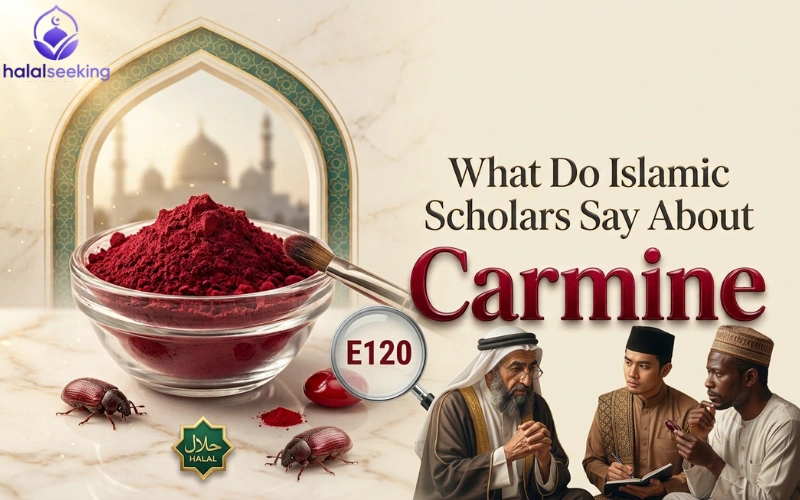
The majority of contemporary Islamic scholars consider Carmine not halal because it is produced from crushed cochineal insects.
Many halal certification organizations also advise Muslim consumers to avoid products containing Carmine unless there is a clear scholarly ruling or reliable halal certification supporting its use.
While scholars may discuss the issue from different legal perspectives, many Muslims follow a cautious approach by avoiding products that list Carmine or E120 as an ingredient.
As a practical guideline:
- Choose products that do not contain Carmine or E120.
- Look for trusted halal certification whenever possible.
- Read ingredient labels carefully before purchasing processed foods.
Can Muslims Eat Products That Contain Carmine?
For many Muslims, the answer is no. Since Carmine is made from cochineal insects, the majority of contemporary scholars advise avoiding products that contain it.
However, you’ll sometimes find different scholarly discussions on the topic. Some examine whether all insects have the same ruling or whether the manufacturing process affects the final verdict.
For everyday shopping, many Muslims follow a simple rule:
- ✅ Avoid products containing Carmine (E120).
- ✅ Choose products with halal-certified colorings.
- ✅ Read ingredient labels before buying.
If you’re unsure about a product, choosing a Carmine-free alternative is usually the safest option.
Where Is Carmine Commonly Found?
Many people associate Carmine with candy, but it’s used in far more products than most consumers realize.
Food & Drinks
Carmine is commonly added to:
- Candies
- Gummies
- Yogurt
- Ice cream
- Cakes
- Frosting
- Fruit-flavored drinks
- Soft drinks
- Jams
- Dessert toppings
Cosmetics
Because Carmine produces a bright, long-lasting red color, it’s also popular in cosmetics, including:
- Lipstick
- Lip gloss
- Blush
- Eyeshadow
Medicines & Supplements
Some manufacturers use Carmine to color:
- Capsules
- Tablets
- Syrups
- Vitamin supplements
Since recipes and formulations can change, always check the ingredient label instead of assuming a product is Carmine-free.
How Can You Spot Carmine on an Ingredient Label?
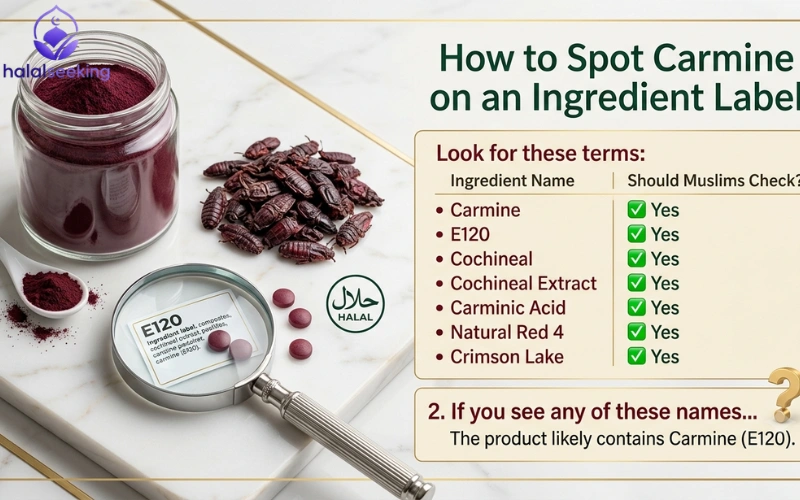
Manufacturers don’t always write “Carmine.” The same ingredient may appear under several different names.
Look for these terms:
| Ingredient Name | Should Muslims Check? |
| Carmine | ✅ Yes |
| E120 | ✅ Yes |
| Cochineal | ✅ Yes |
| Cochineal Extract | ✅ Yes |
| Carminic Acid | ✅ Yes |
| Natural Red 4 | ✅ Yes |
| Crimson Lake | ✅ Yes |
If you see any of these names, the product likely contains Carmine.
Carmine vs Red 40: What’s the Difference?
Many people confuse Carmine with Red 40, but they’re completely different ingredients.
| Feature | Carmine (E120) | Red 40 |
| Source | Cochineal insects | Synthetic dye |
| Natural or Synthetic | Natural | Artificial |
| Contains Insects | Yes | No |
| Halal Concern | Insect origin | Manufacturing process |
| Common Uses | Food, cosmetics, medicines | Candy, drinks, snacks |
Both ingredients raise halal questions, but for different reasons. Carmine comes directly from insects, while Red 40 is a synthetic coloring that is discussed separately.
Are There Halal Alternatives to Carmine?
Yes. Many manufacturers now use plant-based or synthetic colorings instead of Carmine.
Some common alternatives include:
- Beet Juice
- Paprika Extract
- Anthocyanins
- Red Cabbage Extract
- Red 40 (where considered permissible)
If you’re looking for the safest choice, products carrying a trusted halal certification provide greater confidence than relying on ingredient names alone.
When shopping:
- Read the ingredient list carefully.
- Look for halal certification where available.
- Choose Carmine-free products whenever possible if you wish to avoid scholarly differences.
If you’re checking ingredients for halal compliance, you may also find these guides helpful:
FAQs
Is Carmine halal or haram?
Most contemporary Islamic scholars consider Carmine (E120) haram because it is made from crushed cochineal insects. Many Muslims avoid products containing Carmine and choose halal-certified alternatives instead.
Is E120 the same as Carmine?
Yes. E120 is the food additive number for Carmine. It may also appear as Cochineal, Cochineal Extract, Carminic Acid, or Natural Red 4 on ingredient labels.
Is Carmine made from insects?
Yes. Carmine is extracted from cochineal insects. These insects are dried and processed to produce the red pigment used in foods, cosmetics, and medicines.
Which foods commonly contain Carmine?
Carmine is often found in:
- Candy
- Gummies
- Yogurt
- Ice cream
- Cakes
- Fruit drinks
- Desserts
Always read the ingredient label, as recipes can change.
Does Carmine contain pork?
No. Carmine does not contain pork or pig-derived ingredients. The halal concern comes from its insect origin, not from pork.
How can I identify Carmine on food labels?
Look for any of these names:
- Carmine
- E120
- Cochineal
- Cochineal Extract
- Carminic Acid
- Natural Red 4
If you see one of these ingredients, the product likely contains Carmine.
Are cosmetics containing Carmine halal?
Many lipsticks, blushes, and other red cosmetics use Carmine for coloring. Muslims who avoid insect-derived ingredients often choose cosmetics that use plant-based or halal-certified colorings instead.
What is the safest alternative to Carmine?
Products with halal certification are usually the safest choice. Many manufacturers also use plant-based colorings such as beet juice or paprika extract instead of Carmine.
Conclusion
Is Carmine halal? For most Muslims, the practical answer is no. Since Carmine (E120) is produced from crushed cochineal insects, the majority of contemporary scholars consider it haram and advise avoiding products that contain it.
The easiest way to make an informed choice is to read ingredient labels carefully. If you find Carmine, E120, Cochineal, or Carminic Acid, consider choosing a Carmine-free or halal-certified alternative. With a little attention while shopping, you can confidently avoid doubtful ingredients and make choices that align with your Islamic dietary beliefs.